Cross-Page Tables
A table continues on the next page—merge it or keep each fragment?
✅ NormativeSettled. The requirement holds as written.📚 Document ruleNeeds other pages of the same document; decided once and applied on every page.Read §4.3 in the RFC ↗
A table that runs across a page break MUST be rendered as one fragment per page, each on its own page, complete and exactly as that page prints it. Fragments MUST NOT be joined. In the sidecar, each fragment MUST carry two continuation flags — continues from the previous page and continues onto the next page — decided at document level, from the pages on both sides of the break.
When it applies
A table runs off the bottom of one page and picks up on the next, sometimes with the headers repeated, sometimes not, sometimes with "(continued)" in the title.
── page 12 ──                    ── page 13 ──
| State | Rate |                 | State | Rate |   ← header repeated
| AL    | 1.10 |                 | MT    | 0.95 |     (sometimes it isn't)
| …     | …    |                 | …     | …    |
Reading the examples. Each one pairs a source page with the output the rule expects. ✅ Sample: the rule applies. ❌ Counter-sample: it looks like it applies and does not, or a rendering got it wrong. A non-conforming output, in red, is shown only for contrast. … marks content left out of an excerpt.
Fragments stay on their pages
- Rows from two pages MUST NOT be merged into one table, unless a join is requested under Output Options (§3.5).
- A header from one page MUST NOT be copied onto another page's fragment. What is printed on a page is what that page's fragment holds (never invent).
- A cell cut by the page break MUST end at the page boundary; the next page's fragment holds only the text visible there. Missing labels or values MUST NOT be repeated to complete either half.
- A printed continuation marker such as
(continued)is text and MUST be transcribed — see Continued in the Title (§9.2.3).
Reading a table's true extent needs a page that is not in view, so a join made from one page is a guess. A fragment with its continuation flags loses nothing and claims nothing false; a wrong join loses both fragments, and a fused table cannot be split again.
Continuation flags — a document-level decision
Each table fragment in the sidecar carries two boolean flags, continuesFromPreviousPage and
continuesOnNextPage (see The Sidecar (§3.4)). They are decided with both sides of the break in view,
not from one page alone:
- A fragment that ends a page and the fragment that opens the next page are one table when the
second has the same columns and either prints no header, repeats the first one's header, or is
marked as continued. Then the first MUST have
continuesOnNextPage: trueand the secondcontinuesFromPreviousPage: true. - The two flags MUST agree across the break: a fragment flagged as continuing onto the next page requires the first table of the next page to be flagged as continuing from the previous one, and the reverse.
- A fragment that does not continue across a break MUST have both flags
false.
page 12  last table     continuesFromPreviousPage: false   continuesOnNextPage: true
page 13  first table    continuesFromPreviousPage: true    continuesOnNextPage: false
Signals worth reading
- A repeated header at the top of the second fragment does not mean it is a new table — a continued table routinely re-declares its columns after a page break. This is the one place where header repetition is not a boundary; see Repeated Headers and Title Bands (§9.2.7).
- A second fragment that starts straight into data rows, with no header, is the strongest ordinary continuation signal.
- An explicit "(continued)" in the title or at the foot of the page is stronger still.
- A first fragment whose rows run to the foot of the page with no total row supports the reading; a closing total row argues against it.
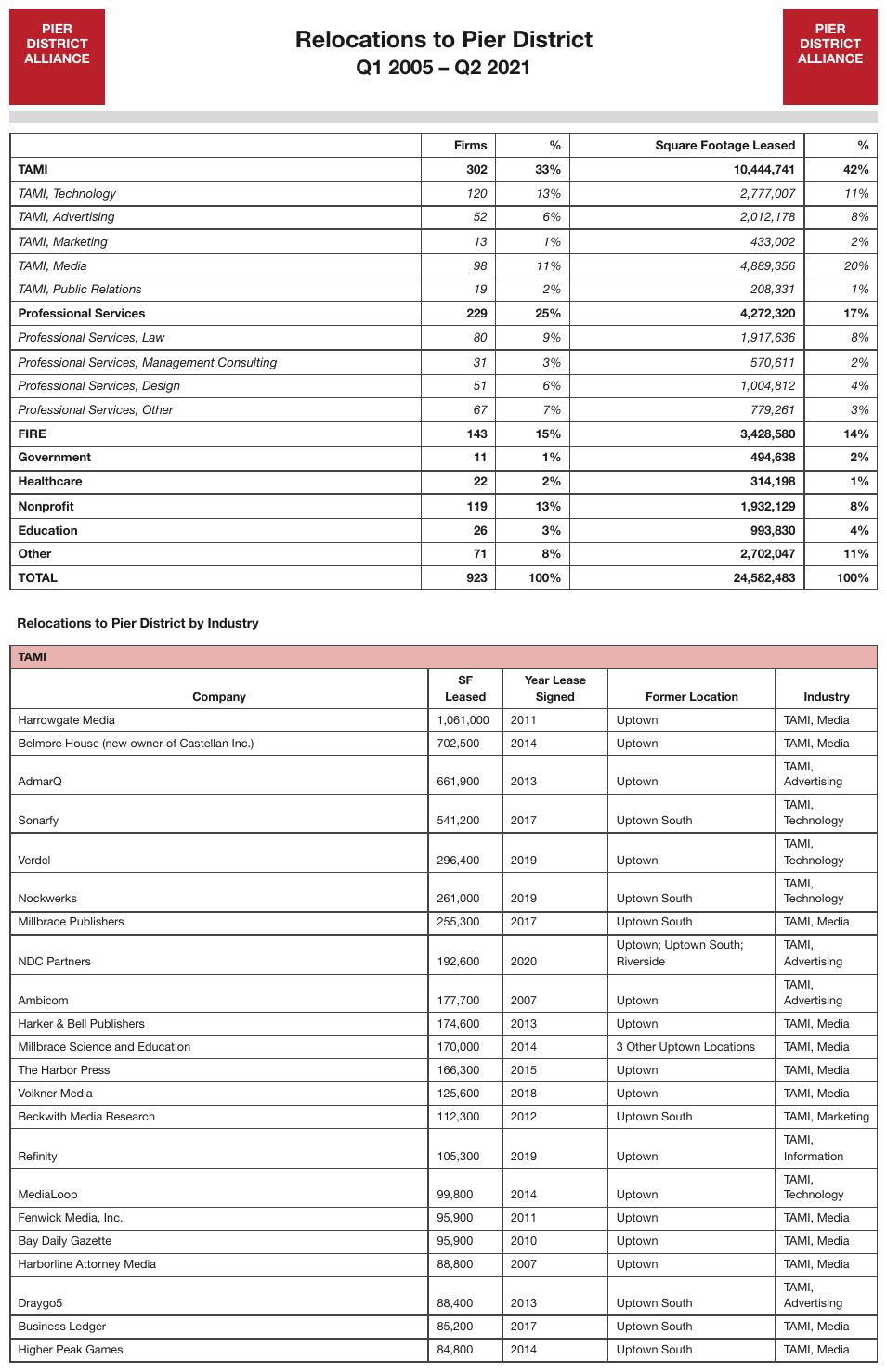
Page onedt1
the company-relocation table under Relocations to Pier District by Industry prints its
TAMI band and header row once, and runs to the foot of the page with no closing total. The
italic industry sub-rows of the summary table above are not indented.
Source page
Expected output · table 2 of 2, excerpt
Relocations to Pier District by Industry
| TAMI | ||||||||||||||||||||||||||||||||||||||||||||||||||||||||||||||||||||||||||||||||||||||||||||||||||
|---|---|---|---|---|---|---|---|---|---|---|---|---|---|---|---|---|---|---|---|---|---|---|---|---|---|---|---|---|---|---|---|---|---|---|---|---|---|---|---|---|---|---|---|---|---|---|---|---|---|---|---|---|---|---|---|---|---|---|---|---|---|---|---|---|---|---|---|---|---|---|---|---|---|---|---|---|---|---|---|---|---|---|---|---|---|---|---|---|---|---|---|---|---|---|---|---|---|---|
| Company | SF Leased | Year Lease Signed | Former Location | Industry | ||||||||||||||||||||||||||||||||||||||||||||||||||||||||||||||||||||||||||||||||||||||||||||||
| Harrowgate Media | 1,061,000 | 2011 | Uptown | TAMI, Media | ||||||||||||||||||||||||||||||||||||||||||||||||||||||||||||||||||||||||||||||||||||||||||||||
| Belmore House (new owner of Castellan Inc.) | 702,500 | 2014 | Uptown | TAMI, Media | ||||||||||||||||||||||||||||||||||||||||||||||||||||||||||||||||||||||||||||||||||||||||||||||
| AdmarQ | 661,900 | 2013 | Uptown | TAMI, Advertising | ||||||||||||||||||||||||||||||||||||||||||||||||||||||||||||||||||||||||||||||||||||||||||||||
| Sonarfy | 541,200 | 2017 | Uptown South | TAMI, Technology | ||||||||||||||||||||||||||||||||||||||||||||||||||||||||||||||||||||||||||||||||||||||||||||||
| … | ||||||||||||||||||||||||||||||||||||||||||||||||||||||||||||||||||||||||||||||||||||||||||||||||||
| NDC Partners | 192,600 | 2020 | Uptown; Uptown South; Riverside | TAMI, Advertising | ||||||||||||||||||||||||||||||||||||||||||||||||||||||||||||||||||||||||||||||||||||||||||||||
| … | ||||||||||||||||||||||||||||||||||||||||||||||||||||||||||||||||||||||||||||||||||||||||||||||||||
| Draygo5 | 88,400 | 2013 | Uptown South | TAMI, Advertising | ||||||||||||||||||||||||||||||||||||||||||||||||||||||||||||||||||||||||||||||||||||||||||||||
| Business Ledger | 85,200 | 2017 | Uptown South | TAMI, Media | ||||||||||||||||||||||||||||||||||||||||||||||||||||||||||||||||||||||||||||||||||||||||||||||
| Higher Peak Games | 84,800 | 2014 | Uptown South | TAMI, Media | ||||||||||||||||||||||||||||||||||||||||||||||||||||||||||||||||||||||||||||||||||||||||||||||
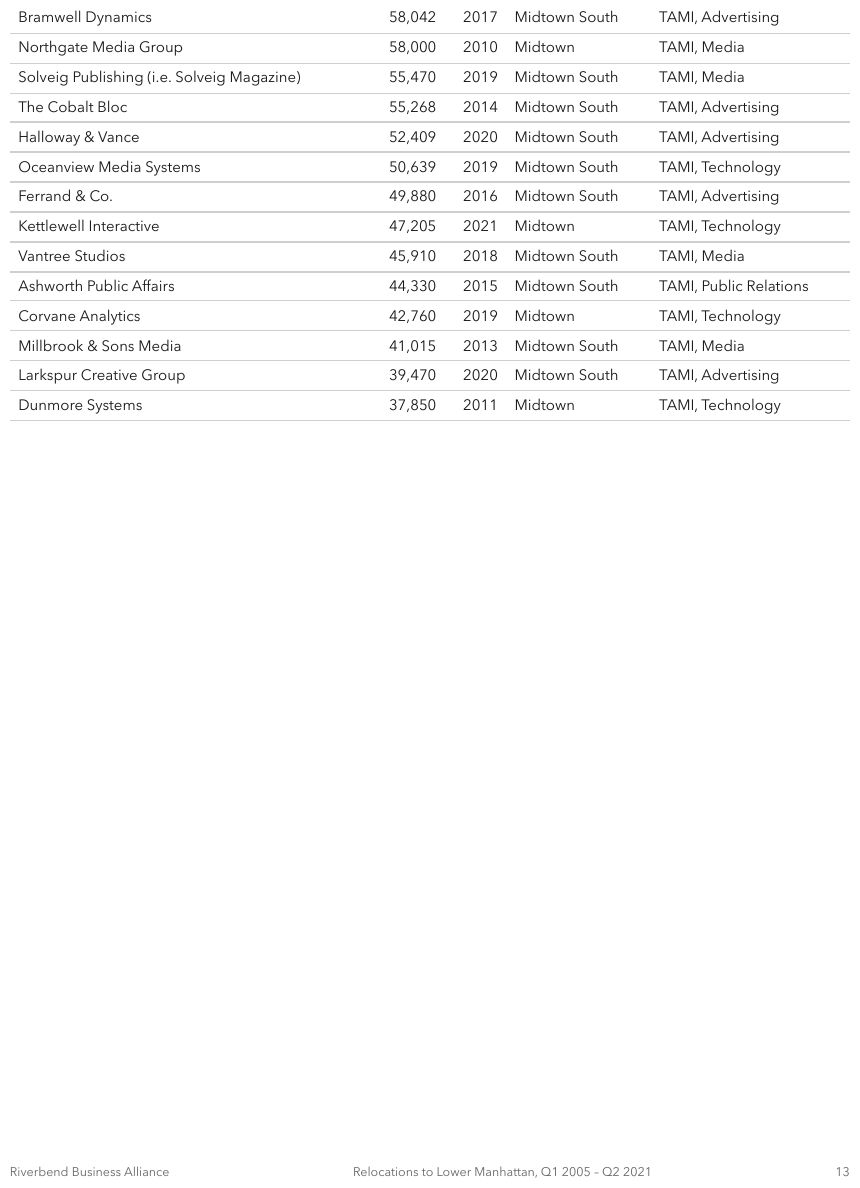
Page twodt2
pure data rows continuing it, with no header row at all. The fragment is rendered headerless, exactly as printed — which shows why a per-page fragment can be unreadable alone.
Source page
Expected output · the table
| Bramwell Dynamics | 58,042 | 2017 | Midtown South | TAMI, Advertising |
| Northgate Media Group | 58,000 | 2010 | Midtown | TAMI, Media |
| Solveig Publishing (i.e. Solveig Magazine) | 55,470 | 2019 | Midtown South | TAMI, Media |
| The Cobalt Bloc | 55,268 | 2014 | Midtown South | TAMI, Advertising |
| Halloway & Vance | 52,409 | 2020 | Midtown South | TAMI, Advertising |
| Oceanview Media Systems | 50,639 | 2019 | Midtown South | TAMI, Technology |
| Ferrand & Co. | 49,880 | 2016 | Midtown South | TAMI, Advertising |
| Kettlewell Interactive | 47,205 | 2021 | Midtown | TAMI, Technology |
| Vantree Studios | 45,910 | 2018 | Midtown South | TAMI, Media |
| Ashworth Public Affairs | 44,330 | 2015 | Midtown South | TAMI, Public Relations |
| Corvane Analytics | 42,760 | 2019 | Midtown | TAMI, Technology |
| Millbrook & Sons Media | 41,015 | 2013 | Midtown South | TAMI, Media |
| Larkspur Creative Group | 39,470 | 2020 | Midtown South | TAMI, Advertising |
| Dunmore Systems | 37,850 | 2011 | Midtown | TAMI, Technology |
Sub-case: headers printed at the bottom too
Some reports print the column headers at both the top and the bottom of each page's block. The bottom repeat is printed content and MUST be kept, as a row of the fragment (never drop).
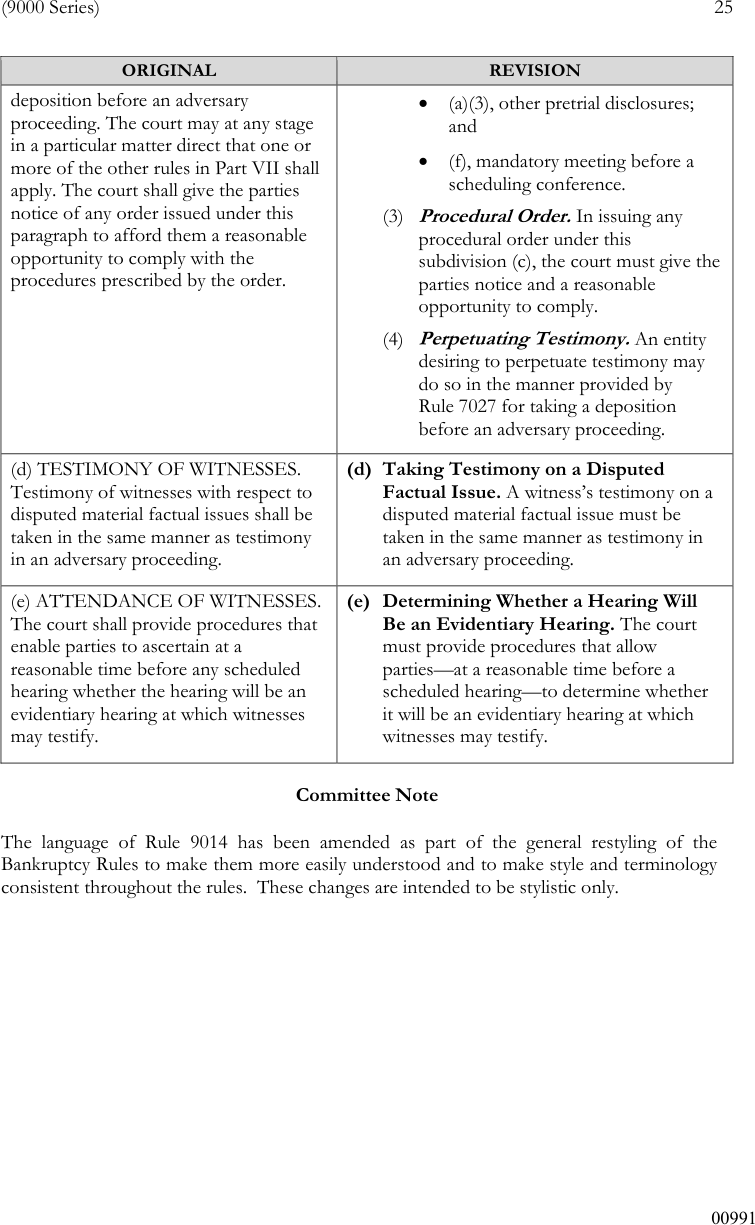
a two-column comparison table continued from the previous page
ORIGINAL / REVISION headers are repeated, and the first row starts mid-sentence in both
columns. The cells hold paragraphs and bulleted lists — see
Record Groups and Multi-Line Cells (§9.5.3) for lists inside a cell.
Source page
Source: Advisory Committee on Bankruptcy Rules (U.S. Courts), Committee Note to proposed Rule 9014 amendments (9000 Series), restyling redline (public domain)
Expected output · the table
| ORIGINAL | REVISION |
|---|---|
| deposition before an adversary proceeding. The court may at any stage in a particular matter direct that one or more of the other rules in Part VII shall apply. The court shall give the parties notice of any order issued under this paragraph to afford them a reasonable opportunity to comply with the procedures prescribed by the order. |
(4) Perpetuating Testimony. An entity desiring to perpetuate testimony may do so in the manner provided by Rule 7027 for taking a deposition before an adversary proceeding. |
| (d) TESTIMONY OF WITNESSES. Testimony of witnesses with respect to disputed material factual issues shall be taken in the same manner as testimony in an adversary proceeding. | (d) Taking Testimony on a Disputed Factual Issue. A witness’s testimony on a disputed material factual issue must be taken in the same manner as testimony in an adversary proceeding. |
| (e) ATTENDANCE OF WITNESSES. The court shall provide procedures that enable parties to ascertain at a reasonable time before any scheduled hearing whether the hearing will be an evidentiary hearing at which witnesses may testify. | (e) Determining Whether a Hearing Will Be an Evidentiary Hearing. The court must provide procedures that allow parties—at a reasonable time before a scheduled hearing—to determine whether it will be an evidentiary hearing at which witnesses may testify. |
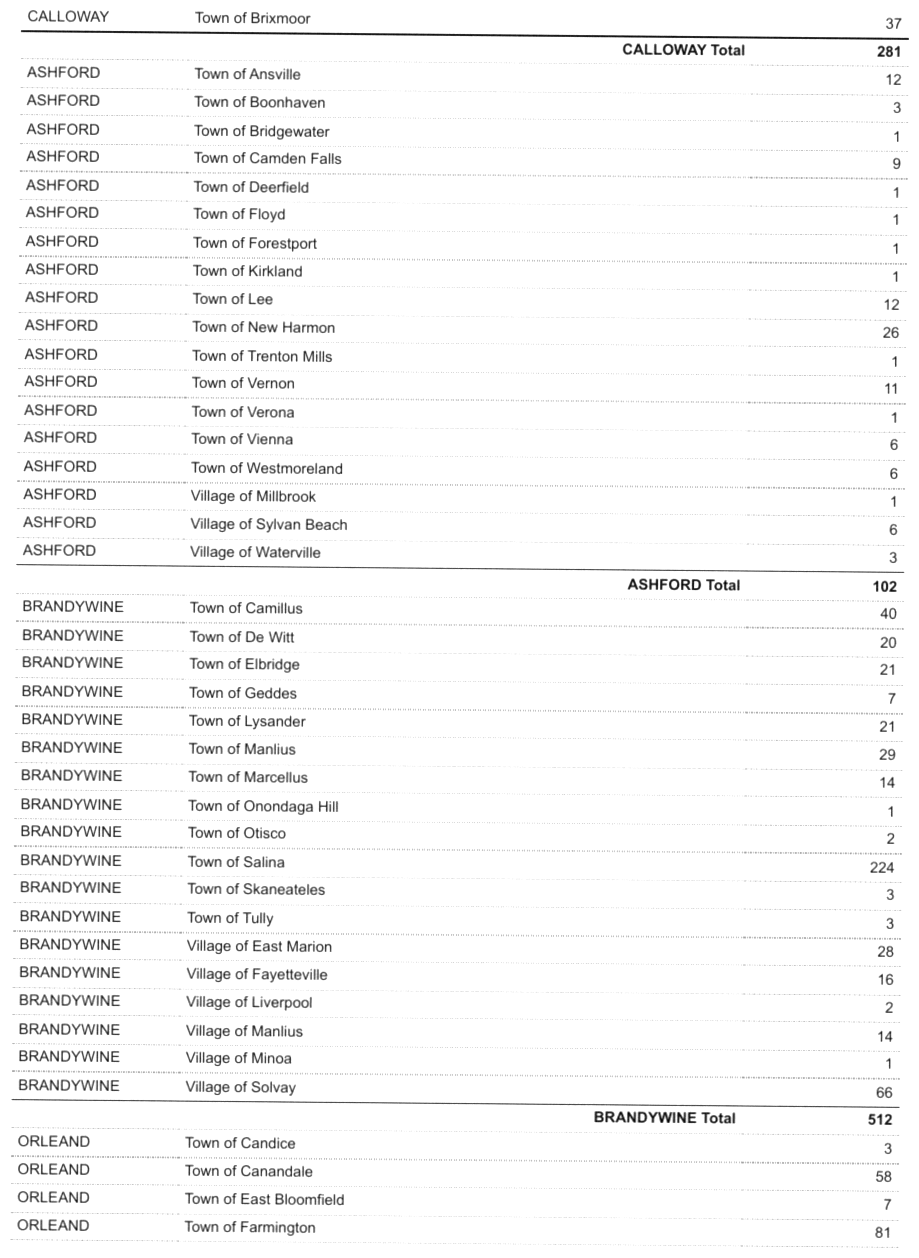
a continuation page with no header at all
Page 9 of a long list: the first row is the last town of CALLOWAY, followed by its total; no
column headers anywhere on the page. The fragment cannot be read without the page before it. Each
bold … Total label sits in the town column, with its sum in the count column.
Source page
Expected output · excerpt
| CALLOWAY | Town of Brixmoor | 37 | ||||||||||||||||||||||||||||||||||||||||||||||||||||||||||||||||||||||||||||||||||||||||||||||||
| CALLOWAY Total | 281 | |||||||||||||||||||||||||||||||||||||||||||||||||||||||||||||||||||||||||||||||||||||||||||||||||
|---|---|---|---|---|---|---|---|---|---|---|---|---|---|---|---|---|---|---|---|---|---|---|---|---|---|---|---|---|---|---|---|---|---|---|---|---|---|---|---|---|---|---|---|---|---|---|---|---|---|---|---|---|---|---|---|---|---|---|---|---|---|---|---|---|---|---|---|---|---|---|---|---|---|---|---|---|---|---|---|---|---|---|---|---|---|---|---|---|---|---|---|---|---|---|---|---|---|---|
| ASHFORD | Town of Ansville | 12 | ||||||||||||||||||||||||||||||||||||||||||||||||||||||||||||||||||||||||||||||||||||||||||||||||
| ASHFORD | Town of Boonhaven | 3 | ||||||||||||||||||||||||||||||||||||||||||||||||||||||||||||||||||||||||||||||||||||||||||||||||
| ASHFORD | Town of Bridgewater | 1 | ||||||||||||||||||||||||||||||||||||||||||||||||||||||||||||||||||||||||||||||||||||||||||||||||
| … | ||||||||||||||||||||||||||||||||||||||||||||||||||||||||||||||||||||||||||||||||||||||||||||||||||
| ASHFORD | Village of Waterville | 3 | ||||||||||||||||||||||||||||||||||||||||||||||||||||||||||||||||||||||||||||||||||||||||||||||||
| ASHFORD Total | 102 | |||||||||||||||||||||||||||||||||||||||||||||||||||||||||||||||||||||||||||||||||||||||||||||||||
| BRANDYWINE | Town of Camillus | 40 | ||||||||||||||||||||||||||||||||||||||||||||||||||||||||||||||||||||||||||||||||||||||||||||||||
| … | ||||||||||||||||||||||||||||||||||||||||||||||||||||||||||||||||||||||||||||||||||||||||||||||||||
| ORLEAND | Town of Farmington | 81 | ||||||||||||||||||||||||||||||||||||||||||||||||||||||||||||||||||||||||||||||||||||||||||||||||
(Continued) at the foot of the page
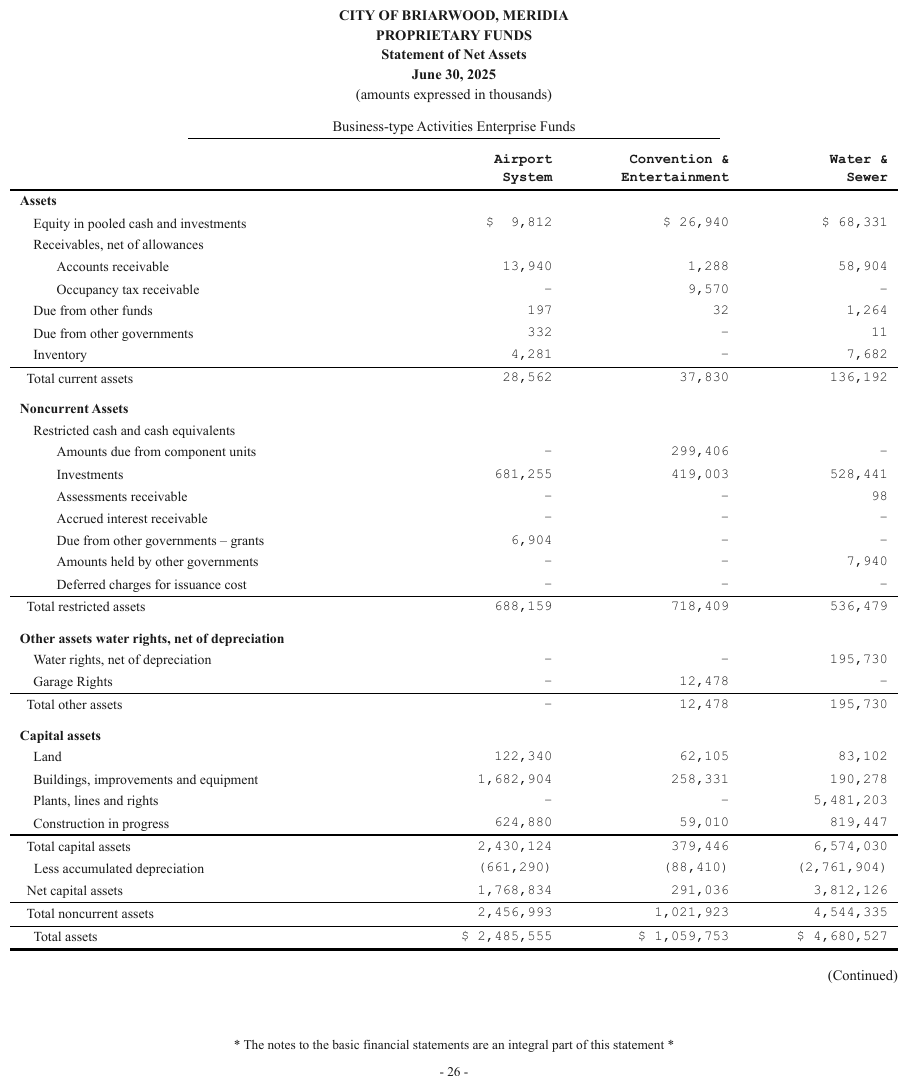
A statement of net assets that ends with Total assets and then prints (Continued) at the
bottom right, outside the table: the page itself says the next page carries on. The marker is kept
as a line after the table. The stub prints four indent positions.
Source page
Expected output · excerpt, head and foot of the table
Business-type Activities Enterprise Funds
| Airport System | Convention & Entertainment | Water & Sewer | ||||||||||||||||||||||||||||||||||||||||||||||||||||||||||||||||||||||||||||||||||||||||||||||||
|---|---|---|---|---|---|---|---|---|---|---|---|---|---|---|---|---|---|---|---|---|---|---|---|---|---|---|---|---|---|---|---|---|---|---|---|---|---|---|---|---|---|---|---|---|---|---|---|---|---|---|---|---|---|---|---|---|---|---|---|---|---|---|---|---|---|---|---|---|---|---|---|---|---|---|---|---|---|---|---|---|---|---|---|---|---|---|---|---|---|---|---|---|---|---|---|---|---|---|
| Assets | ||||||||||||||||||||||||||||||||||||||||||||||||||||||||||||||||||||||||||||||||||||||||||||||||||
| Equity in pooled cash and investments | $ 9,812 | $ 26,940 | $ 68,331 | |||||||||||||||||||||||||||||||||||||||||||||||||||||||||||||||||||||||||||||||||||||||||||||||
| … | ||||||||||||||||||||||||||||||||||||||||||||||||||||||||||||||||||||||||||||||||||||||||||||||||||
| Total capital assets | 2,430,124 | 379,446 | 6,574,030 | |||||||||||||||||||||||||||||||||||||||||||||||||||||||||||||||||||||||||||||||||||||||||||||||
| Less accumulated depreciation | (661,290) | (88,410) | (2,761,904) | |||||||||||||||||||||||||||||||||||||||||||||||||||||||||||||||||||||||||||||||||||||||||||||||
| Net capital assets | 1,768,834 | 291,036 | 3,812,126 | |||||||||||||||||||||||||||||||||||||||||||||||||||||||||||||||||||||||||||||||||||||||||||||||
| Total noncurrent assets | 2,456,993 | 1,021,923 | 4,544,335 | |||||||||||||||||||||||||||||||||||||||||||||||||||||||||||||||||||||||||||||||||||||||||||||||
| Total assets | $ 2,485,555 | $ 1,059,753 | $ 4,680,527 | |||||||||||||||||||||||||||||||||||||||||||||||||||||||||||||||||||||||||||||||||||||||||||||||
(Continued)
…
a cell cut by the page break
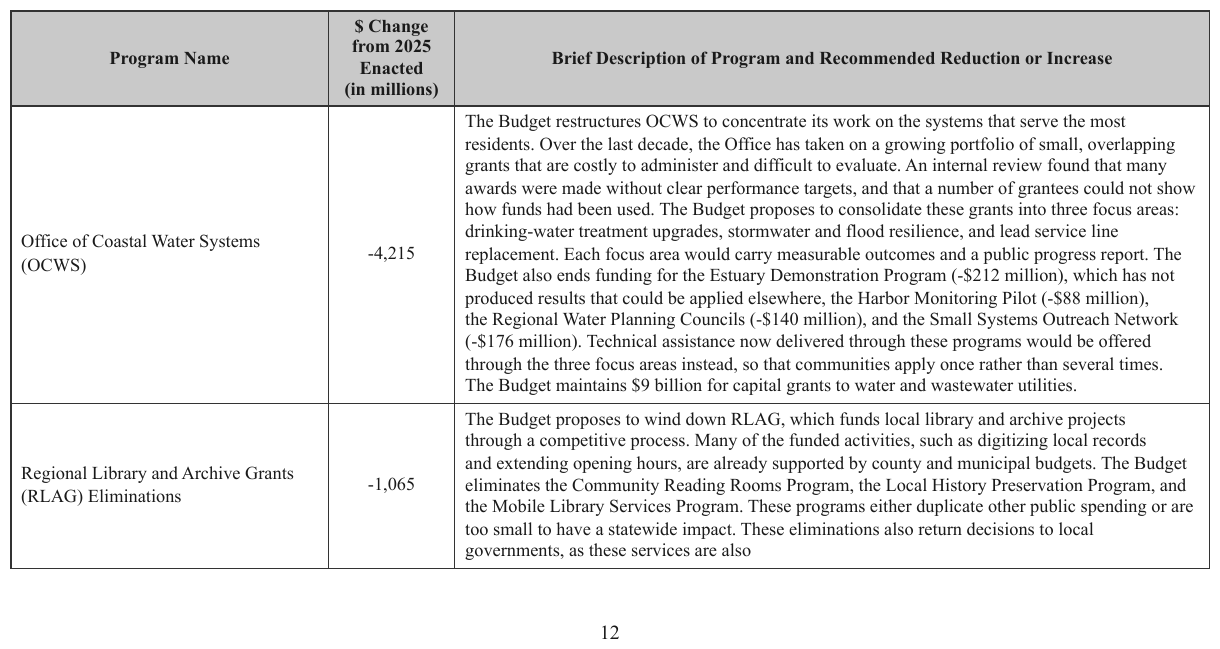
A two-row table whose second Brief Description cell ends mid-sentence at the foot of the page
— as these services are also — with the rest on the next page. The row, not just the table,
is split. Each page's fragment keeps only that page's visible text.
Source page
Expected output · this page's fragment
| Program Name | $ Change from 2025 Enacted (in millions) | Brief Description of Program and Recommended Reduction or Increase |
|---|---|---|
| Office of Coastal Water Systems (OCWS) | -4,215 | The Budget restructures OCWS to concentrate its work on the systems that serve the most residents. Over the last decade, the Office has taken on a growing portfolio of small, overlapping grants that are costly to administer and difficult to evaluate. An internal review found that many awards were made without clear performance targets, and that a number of grantees could not show how funds had been used. The Budget proposes to consolidate these grants into three focus areas: drinking-water treatment upgrades, stormwater and flood resilience, and lead service line replacement. Each focus area would carry measurable outcomes and a public progress report. The Budget also ends funding for the Estuary Demonstration Program (-$212 million), which has not produced results that could be applied elsewhere, the Harbor Monitoring Pilot (-$88 million), the Regional Water Planning Councils (-$140 million), and the Small Systems Outreach Network (-$176 million). Technical assistance now delivered through these programs would be offered through the three focus areas instead, so that communities apply once rather than several times. The Budget maintains $9 billion for capital grants to water and wastewater utilities. |
| Regional Library and Archive Grants (RLAG) Eliminations | -1,065 | The Budget proposes to wind down RLAG, which funds local library and archive projects through a competitive process. Many of the funded activities, such as digitizing local records and extending opening hours, are already supported by county and municipal budgets. The Budget eliminates the Community Reading Rooms Program, the Local History Preservation Program, and the Mobile Library Services Program. These programs either duplicate other public spending or are too small to have a statewide impact. These eliminations also return decisions to local governments, as these services are also |
Neighbouring rules, and how they differ
More
Sample sources1 +
Public-domain U.S. federal government source material.
- Advisory Committee on Bankruptcy Rules (U.S. Courts), Committee Note to proposed Rule 9014 amendments (9000 Series), restyling redline
Rule id tables-cross-page-tables · continuation tables